City water can be fully disinfected, EPA-regulated, and still be rough on plumbing. In many U.S. Metros, hardness remains high enough to leave scale in water heaters, cloud glassware, and make soap noticeably less effective. That is why the search for the Best Water Softener For City Water is not really about whether your utility is “safe.” It is about whether your home is being fed water loaded with calcium and magnesium every single day, often alongside chlorine or chloramines that slowly wear on softener resin.
A recent case that stayed with me involved the Navarro family in north Dallas. Elena Navarro, 41, is a public school assistant principal, and her husband Marco, 43, works as a project estimator for a commercial electrician. Their municipal supply tested around 16 GPG hardness based on local utility reporting, firmly in hard-water territory. They had already tried a salt-free conditioner after moving into a newer suburban home, but the dishwasher interior still filmed over, Marco kept replacing shower heads, and Elena noticed their water heater sounding “crackly” within the first year. After comparing mainstream options, the system that checked the most boxes for Dallas-style municipal water was the SoftPro Elite Water Softener.
What makes one system stand out over another on city water comes down to a handful of things: resin durability in chlorinated water, regeneration efficiency, accurate sizing from your utility data, stable flow at normal municipal pressure, useful controls, and long-term ownership cost. Those are the points I evaluated here, along with how the SoftPro Elite stacks up against widely discussed alternatives like the Fleck 5600SXT, SpringWell SS1, and Whirlpool’s WHES40E.
Key Takeaways
- After reviewing the category, the SoftPro Elite Water Softener stands out because its 8% crosslink resin is specifically well-suited to chlorinated municipal supplies. Upflow regeneration is the biggest practical differentiator for city homeowners because it cuts salt and water waste compared with common downflow designs. Your city’s Consumer Confidence Report is the smartest free starting point for sizing; hardness in mg/L can be converted to GPG by dividing by 17.1. Most city water installations do not need a sediment pre-filter, which simplifies installation and reduces extra maintenance. The combination of NSF 372 certification, IAPMO materials safety approval, a 15 GPM continuous flow rate, and lifetime valve and tank warranty gives SoftPro Elite unusually strong value.
QUICK ANSWER:
The SoftPro Elite Water Softener is my top pick for municipal water homes because it combines chlorine-resistant 8% crosslink resin, efficient upflow regeneration, and demand-initiated metering in one system. It handles common city water hardness levels from moderate to very hard, works well with steady municipal pressure, delivers 15 GPM continuous flow and 18 GPM peak, and carries NSF 372 certification with IAPMO materials safety approval. It is available in 32K, 48K, 64K, 80K, and 110K sizes from Quality Water Treatment (QWT).#1. Chlorine-Resistant Resin — Why the Best Water Softener For City Water Must Handle Municipal Disinfectants First
SoftPro Elite earns its edge on city water because its 8% crosslink resin is built to hold up under ongoing chlorine and chloramine exposure. Municipal water is not raw water; it is chemically treated water, and that treatment matters. Chlorine and chloramines protect public health, but they also create an oxidative environment that can shorten resin life in ordinary softeners. Based on the specifications and the way city systems are actually used, resin durability is the first filter I apply when judging a municipal water softener.
For homeowners, this is not an abstract chemistry issue. Resin that degrades early loses exchange capacity, allows hardness breakthrough, and can force an expensive rebedding job years sooner than expected. SoftPro Elite is rated for up to 2 PPM continuous chlorine exposure and has an expected resin life of 15 to 20 years in normal city-water service. That is a major practical advantage over many standard softeners homeowners buy without ever asking what their city adds to the water.
The Navarro family in Dallas noticed the city-water pattern clearly: safe water, yes, but also persistent spotting and stiff laundry. In their case, chlorine was not the visible problem; the interaction between hard water and municipal treatment was.
What chlorine does to softener resin over time
City water commonly carries free chlorine or chloramines from the treatment plant to your tap. According to the Water Quality Association and standard ion-exchange chemistry principles, oxidants gradually attack resin beads. When that happens, beads can become discolored, brittle, or soft, and the softener starts leaking hardness even though salt is present in the brine tank.
Five facts matter here:
- EPA-regulated utilities commonly use chlorine or chloramines for residual disinfection. Hardness is still present after disinfection because treatment plants are not necessarily softening the supply. SoftPro Elite uses 8% crosslink ion exchange resin. That resin is specified to tolerate up to 2 PPM continuous chlorine in residential use. Expected resin life is 15–20 years, much longer than the 7–10 years often seen with more basic setups in chlorinated environments.
What is crosslink resin?
What is crosslink resin? Crosslink resin is the plastic bead media inside a softener that swaps hardness minerals like calcium and magnesium for sodium during ion exchange. Higher chemical durability helps the resin survive oxidants in city water and maintain capacity longer.
Why this matters more on city water than many buyers realize
With well water, reviewers tend to focus on iron or sediment. On city water, the bigger hidden issue is disinfectant exposure. That shifts the priority list. If I am evaluating a municipal water softener, I want resin chemistry that acknowledges chlorine as a normal operating condition, not an afterthought.
This is one reason the SoftPro Elite Water Softener System rises quickly to the top of the field. Craig Phillips, who founded SoftPro Water Systems through QWT, built the brand around practical performance rather than flashy dealer talk, and this resin choice fits that approach. For city homeowners, it is a very real long-term ownership advantage.
Key takeaway
If your utility uses chlorine or chloramines, resin durability is not a luxury feature. It is the baseline requirement for choosing a Best Water Softener System.
#2. Upflow Regeneration Technology — A Best Water Softener System Should Not Inflate Your City Utility Bill
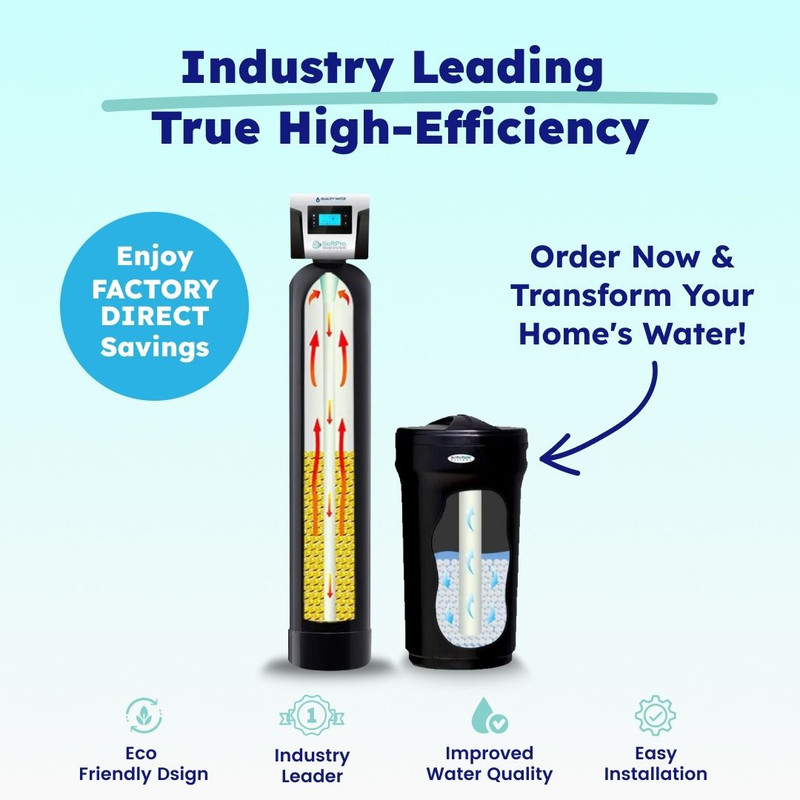
SoftPro Elite stands out because its upflow regeneration design uses dramatically less salt and water than conventional downflow city-water softeners. Regeneration efficiency matters more on city water than many homeowners expect because every unnecessary cycle adds both salt cost and metered water cost. In markets with rising utility rates, this difference compounds year after year.
SoftPro Elite is specified to reduce salt consumption by up to 75% and water use by up to 64% compared with traditional downflow regeneration. Its regeneration profile typically uses about 2–4 pounds of salt and roughly 18–30 gallons of water per cycle, rather than the much heavier consumption seen in older designs. Those are not marketing fluff numbers; they are the kinds soft pro elite water softener of figures I look for when estimating total ownership cost.
For the Navarro family, this mattered because Dallas-area utility bills already had enough moving parts. They did not want scale protection that solved one problem while creating another.
SoftPro Elite vs Fleck 5600SXT for municipal water
When I compare SoftPro Elite with the Fleck 5600SXT, the biggest separation is regeneration strategy. The Fleck 5600SXT remains popular because it is proven and widely available, but it is fundamentally a conventional downflow system. In typical residential use, that means regeneration can run in a range closer to 6–15 pounds of salt and around 50–80 gallons of water per cycle. SoftPro Elite recovers usable capacity with a much leaner cycle profile: 2–4 pounds of salt and about 18–30 gallons of water. On a city account where both water and sewer charges are tied to usage, that is not a small distinction.
The second difference is reserve strategy. SoftPro Elite works with 15% reserve capacity, while older-style systems often need 30% or more to avoid hard water breakthrough. That tighter reserve means more of the tank’s rated capacity is actually working for the homeowner. If I were choosing strictly for city-water efficiency, SoftPro Elite is the stronger design and, in my view, worth every penny.
Why upflow matters in real daily use
Upflow regeneration sends brine through the resin bed in a way that improves contact efficiency and avoids some of the waste built into conventional patterns. For a homeowner, that translates into:
- Fewer bags of salt purchased across a year Lower water use during regeneration Better use of installed grain capacity Less guilt about owning a salt-based softener on a metered city connection More predictable operating cost
Real-world cost logic
A system can have a lower purchase price and still cost more to own. That is exactly what happens with many basic downflow units. Over 5 to 10 years, salt efficiency and water efficiency matter. Add in a 15-minute quick cycle when capacity drops below 3%, and SoftPro Elite manages demand without forcing oversized waste buffers.
Key takeaway
For municipal homes, efficiency is not just about conservation. It is about avoiding a softener that slowly drives up your monthly utility costs.
#3. Consumer Confidence Report Sizing — The Best Ion Exchange Softener for City Water Starts With Your Utility Data
SoftPro Elite is easier to size correctly because city homeowners can use free Consumer Confidence Report data instead of guessing. Every community water system in the U.S. Must provide an annual Consumer Confidence Report, or CCR, under EPA rules. Many homeowners ignore it, but it often contains exactly the data needed to make a better softener decision.
The hardness number may appear directly in grains per gallon, but more often it is shown as mg/L of calcium carbonate. To convert mg/L to GPG, divide by 17.1. That one formula helps separate smart sizing from oversized or undersized buying.
How to size a water softener for city water in 5 steps
Find your utility’s most recent CCR online or in the annual mailing. Locate hardness data in mg/L as CaCO3 or in GPG. Convert to GPG if needed by dividing mg/L by 17.1. Estimate daily use as people in home × 75 gallons per person per day. Multiply daily gallons by GPG, then multiply by 7 days to target a weekly regeneration interval.A family of four using city water at 16 GPG would calculate: 4 × 75 = 300 gallons per day. Then 300 × 16 = 4,800 grains per day. Over a week, that is 33,600 grains, which points comfortably toward a 48K unit. That is exactly the kind of sizing outcome that makes sense for many Dallas-area homes like the Navarros’.
Regional hardness examples homeowners can benchmark against
USGS data and municipal reporting consistently show that city-water hardness varies widely by metro:
- Phoenix often falls around 18–24 GPG. Las Vegas commonly lands around 16–20 GPG. Dallas is often in the 12–18 GPG range. Indianapolis is frequently around 12–18 GPG. Denver can range from about 6–14 GPG depending on source blending.
These ranges matter because a family of four in Phoenix often needs more working capacity than a family of four in Denver, even with similar water use habits.
The role Jeremy Phillips plays in sizing
One brand detail I do think deserves credit is QWT’s sizing process. Jeremy Phillips is frequently mentioned by buyers because he works from actual water data instead of pushing the biggest tank possible. From an independent reviewer’s perspective, that is the right way to sell softeners. It lowers overspending and improves efficiency.
Key takeaway
A softener matched to your actual city hardness will perform better, regenerate less wastefully, and feel more “premium” than a larger but badly chosen unit.
#4. Demand Metering and Low Reserve — Why SoftPro Elite Beats Timer-Based Municipal Water Softeners
SoftPro Elite performs better in everyday city-water use because it regenerates by actual demand instead of a fixed timer. Timer-based softeners still exist in big-box retail because they are simple to sell, but on municipal water they regularly regenerate when they do not need to. That means needless salt use, extra drain water, and avoidable wear.
SoftPro Elite uses demand-initiated metered regeneration and a 15% reserve capacity rather than the 30%+ reserve many standard systems rely on. It also includes a 15-minute emergency regeneration cycle when capacity falls below 3%. Those details are easy to miss on a product page, but they are exactly the details that separate a well-engineered city water softener from a mediocre one.
SoftPro Elite vs Whirlpool WHES40E for city water
Compared with the Whirlpool WHES40E, SoftPro Elite takes a much more efficient approach to regeneration. Whirlpool’s residential units are common because they are accessible and familiar, but timer-like regeneration logic and lighter-duty design often lead to more waste or less precise capacity management. SoftPro Elite meters actual gallon use, works with a 15% reserve, and can trigger a short recovery cycle when the remaining capacity gets critically low. In practical terms, that means less salt over the year, fewer unnecessary regenerations, and a lower chance of running into hard water unexpectedly after a weekend of guests or laundry.
The warranty picture also favors SoftPro Elite. A lifetime warranty on the valve and tanks is simply stronger than what most retail-grade systems offer. For buyers who intend to stay in their homes, that difference alone pushes SoftPro Elite ahead and makes it worth every penny.
Why reserve capacity matters
Reserve capacity is the portion of rated capacity a softener keeps in hand so you do not run out of soft water before the next regeneration. A high reserve is safe but inefficient. A lower, smarter reserve backed by metering and emergency regeneration is better engineering.
SoftPro Elite’s 15% reserve means:
- More of the stated capacity is usable Salt efficiency improves Regeneration can be delayed until it is actually needed City households with variable weekly use get better performance The system avoids the bloated sizing common in older softener sales methods
Case study connection
The Navarros had a pattern common in family homes: weekdays were moderate, but weekends spiked with laundry, showers, and dishwasher use. A demand-metered system made far more sense than a clock-based one.
Key takeaway
Demand metering is one of the least glamorous features to talk about and one of the most important to own.
#5. Top-Rated Water Softener for Municipal Water Flow and Pressure — Why Stable City Supply Works in SoftPro Elite’s Favor
SoftPro Elite is especially well-matched to city homes because its flow and pressure specs align with normal municipal supply conditions. Most municipal systems deliver roughly 40–80 PSI, which is much steadier than private pump-driven systems. SoftPro Elite requires a minimum of 25 PSI and accepts up to 125 PSI, with a pressure regulator recommended if your incoming pressure is above 80 PSI.
This compatibility matters because a good softener should not become the bottleneck in a modern household. SoftPro Elite is rated for 15 GPM continuous flow and 18 GPM peak flow, enough for multi-bathroom suburban homes where several fixtures may be running at once.
Why city pressure stability makes softener performance more predictable
Municipal water’s biggest advantage is consistency. Once the softener is properly sized, city homeowners usually get a more stable experience from fixture to fixture. That means fewer surprise pressure dips, easier setup, and less troubleshooting around feed conditions.
SoftPro Elite also includes:
- A pre-installed bypass valve A self-charging capacitor with 48-hour settings retention during outages Vacation mode with auto-refresh every 7 days A 4-line LCD controller with diagnostics Standard installation logic that fits typical utility rooms and garages
Installation notes specific to city water
For most city-water homes, installation is more straightforward than buyers expect:
- No sediment pre-filter is required in most municipal installations. No pressure tank is needed. A nearby drain is required for regeneration discharge. A GFCI outlet is recommended for the controller. Local plumbing code may require backflow compliance details, so check municipal rules or use a licensed plumber.
Those practical points matter. A system can be technically excellent but annoying to place. SoftPro Elite generally avoids that problem.
Key takeaway
If your home has reliable city pressure and multiple bathrooms, SoftPro Elite has the flow profile to keep up without turning showers weak or appliances sluggish.
#6. Certifications, Warranty, and Support — The Details That Separate a Good City Water Softener From a Risky One
SoftPro Elite ranks highly because independent certifications and long warranty coverage reduce the buyer risk that often hides behind attractive pricing. For treated municipal water, certification is not optional background noise. It is evidence that materials and lead-free claims have been independently reviewed.
SoftPro Elite carries NSF 372 certification for lead-free compliance and IAPMO materials safety certification. Those are meaningful trust markers. Add the lifetime warranty on the valve and tanks, and the ownership profile becomes unusually strong for a system in this class.
SoftPro Elite vs SpringWell SS1 for municipal buyers
SpringWell SS1 is a respectable competitor and uses durable resin, but the systems diverge in ways city homeowners should care about. SpringWell relies on downflow regeneration and the larger reserve logic that usually comes with that design. SoftPro Elite pairs its 8% crosslink resin with upflow regeneration, a 15% reserve, and a 15-minute emergency cycle when capacity drops below 3%. That means better capacity utilization and lower operating waste over time.
The support model is another factor. QWT has been in the water treatment business for more than 30 years, and the company’s direct structure matters. Heather Phillips oversees operations and support resources, including installation guidance that many DIY-minded homeowners mention positively. Compared strictly on city-water ownership experience, SoftPro Elite is the more complete package and, again, worth every penny.
Why direct support matters
I do not treat customer support as fluff. Water treatment is a durable-goods purchase. People keep these systems for years, not months. If the controller throws an error code, if the home gets remodeled, if the hardness changes after a municipal source blend adjustment, homeowners need answers.
That is where QWT’s structure has stood out in my review process:
- Craig Phillips established the brand around straightforward water treatment Jeremy Phillips is often the contact for sizing and selection Heather Phillips is associated with support and logistics Standard components reduce parts headaches Direct guidance is often simpler than navigating dealer layers
Key takeaway
Specifications matter, but certifications and support often determine whether a softener still feels like a smart purchase five years later.
#7. Salt-Free Alternatives vs Ion Exchange — Why SoftPro Elite Produces Real Soft Water on City Supply
SoftPro Elite is the better choice for hard municipal water because ion exchange removes hardness minerals instead of merely changing how they behave. This is the point that confuses more city homeowners than any other. Salt-free systems are often marketed aggressively because they sound easier and cleaner. But most do not soften water in the technical sense.
A TAC conditioner may reduce how scale sticks, but it does not remove calcium and magnesium from the water. The water remains hard. If your goals include less soap scum, easier cleaning, softer-feeling laundry, and better protection for appliances and fixtures, true softening is the more reliable answer.
What is ion exchange?
What is ion exchange? Ion exchange is the softening process in which resin beads capture calcium and magnesium ions from hard water and release sodium in their place. This removes the minerals responsible for scale and soap interference rather than simply treating their side effects.
Why city homeowners get misled by salt-free messaging
The most common “wrong turn” I see on municipal water is a homeowner buying a conditioner to address scale while assuming all the other hard-water symptoms will vanish too. That rarely happens. In the Navarro home, the salt-free unit they tried did not stop cloudy shower glass or crusty faucet aerators because the hardness was still present.
SoftPro Elite’s ion exchange design is better suited for:
- City water scale removal Better soap performance Reduction in mineral spotting Protection of water-using appliances More predictable hardness removal, often 99.6%+
Key takeaway
If your water is hard on paper and hard in daily life, a conditioner is usually not enough. SoftPro Elite fixes the core issue.
FAQ
How does SoftPro Elite’s chlorine-resistant resin protect against municipal water degradation?
SoftPro Elite’s 8% crosslink resin is designed for the oxidative reality of chlorinated and chloramine-treated city water. The direct answer is that it withstands up to 2 PPM continuous chlorine exposure and is expected to last 15–20 years in normal municipal service, which is a major reason it outperforms many basic softeners on city water.
In practical terms, disinfectants slowly attack resin structure. Over time, standard resin can lose capacity, allowing hardness to return even when salt use appears normal. Symptoms include hardness breakthrough, shorter run times between regenerations, and resin that degrades physically. On city water, this chemistry matters more than many homeowners realize because disinfectant residual is present every day, not occasionally.
For a household like the Navarros’ in Dallas at roughly 16 GPG, choosing resin that tolerates chlorinated water means the softener is more likely to hold performance year after year instead of fading early. Based on the specs and real-world ownership patterns I review, this is one of the https://www.softprowatersystems.com/products/softpro-elite-water-softener strongest reasons SoftPro Elite is the right choice for municipal water.
What grain capacity do I need for a family of four with 18 GPG city water?
For a family of four at 18 GPG, a 48K unit is often the best fit, though usage habits can push some homes into a 64K model. Using the common sizing method, start with 4 people × 75 gallons per person per day = 300 gallons. Multiply 300 × 18 GPG to get 5,400 grains per day. Multiply by 7 days and you get 37,800 grains of weekly demand.
That places the household squarely in 48K territory for many homes, especially with an efficient system that does not waste reserve capacity. SoftPro Elite’s 15% reserve strategy helps here because more of the stated capacity remains usable compared with systems that hold back 30% or more.
If that same household has a soaking tub, frequent guests, or heavy laundry volume, stepping up to a 64K can make sense. Jeremy Phillips at QWT is often cited for using actual municipal data and household habits to fine-tune sizing, which is the correct way to do it. From an independent reviewer’s perspective, I would rather see a precisely chosen 48K or 64K SoftPro Elite than an oversized generic softener that regenerates inefficiently.
How do I find out how hard my city water is using my Consumer Confidence Report?
The easiest low-cost method is to pull your utility’s Consumer Confidence Report and look for hardness listed either in grains per gallon or in mg/L as calcium carbonate. If it is listed in mg/L, divide by 17.1 to convert it to GPG.
Every EPA-regulated community water supplier is required to publish a CCR each year. It is usually mailed, emailed, or posted on the utility website. Some cities list hardness clearly; others include broader mineral or source data that may require a closer read. If your city blends sources seasonally, the report may show ranges rather than a single fixed number.
This is useful because it anchors your softener choice in real municipal data rather than strip-test guesswork. In the Navarros’ case, utility reporting helped confirm that their area’s hardness was high enough to justify a real ion-exchange system. For homeowners shopping seriously, CCR data is one of the best free tools available, and it is a very good starting point for choosing the right SoftPro Elite size.
Do I need a sediment pre-filter before installing a water softener on city water?
In most city-water homes, no, a sediment pre-filter is not required before installing SoftPro Elite. Municipal treatment already removes the level of grit and suspended solids that typically makes a pre-filter necessary in other applications.
That is one of the advantages of city-water installations: they are usually cleaner and simpler. If a home has unusual pipe scale shedding from very old interior plumbing, or if a utility has a known issue after main-line work, a homeowner might still add a filter for extra protection. But as a standard rule, SoftPro Elite does not need a sediment pre-filter in typical municipal use.
This keeps installation cleaner and maintenance lighter. It also helps buyers avoid spending extra on accessories they may not need. For city homeowners comparing options, that simplicity is a plus. Based on the design and normal municipal conditions, SoftPro Elite is one of the easier full-capability systems to install without turning the project into an overbuilt treatment train.
Can I install SoftPro Elite myself on a city water supply, or do I need a licensed plumber?
Many homeowners can install SoftPro Elite themselves on city water if they are comfortable cutting into plumbing, adding a drain connection, and following local code. The system is DIY-friendly, includes quick-connect style installation advantages, and city-water setups are usually more straightforward than more complex water sources.
That said, a licensed plumber is the safer route if:
- You are not used to sweat fittings or PEX transitions Local code requires permits or inspection You need a pressure regulator added Drain routing is awkward You want backflow details checked for compliance
SoftPro Elite includes a bypass valve, which simplifies service and regeneration management. It also needs a nearby drain and power source, preferably a GFCI outlet. Homeowners like the Navarros often choose professional installation simply to save time, not because the system is especially difficult. My view is simple: if you are comfortable with basic plumbing and city code requirements, DIY is realistic. If not, hire the plumber and still enjoy the stronger long-term value of SoftPro Elite.
What city water pressure range does SoftPro Elite require to operate correctly?
SoftPro Elite requires a minimum inlet pressure of 25 PSI and accepts up to 125 PSI, with a pressure regulator recommended when municipal pressure exceeds 80 PSI. That makes it very compatible with normal city supply, which typically falls in the 40–80 PSI range.
This is one reason municipal installations tend to go smoothly. City pressure is usually consistent enough that flow and regeneration are predictable. SoftPro Elite also has a 15 GPM continuous flow rate and 18 GPM peak capacity, which helps it serve larger homes without becoming the weak point in the plumbing system.
For buyers in newer subdivisions, incoming city pressure can sometimes run high, so checking static pressure before installation is worthwhile. A simple gauge can tell you if a regulator should be added. For most homes, though, the pressure requirements line up nicely with what the utility is already delivering. On balance, this is a strong technical fit for municipal water and another reason I rank SoftPro Elite so highly.
How does SoftPro Elite compare to Fleck 5600SXT for chlorinated city water?
For chlorinated municipal water, SoftPro Elite is the better overall package because it combines chlorine-tolerant 8% crosslink resin with upflow regeneration and lower reserve requirements. Fleck 5600SXT remains a dependable platform, but it is older in design logic and usually paired with conventional downflow regeneration.
The practical differences show up in three areas. First, SoftPro Elite uses substantially less salt and water per regeneration cycle, which matters on a metered city utility. Second, its 15% reserve capacity is more efficient than the larger reserve assumptions common with older systems. Third, the valve-and-tank lifetime warranty is stronger than what many Fleck-based packages provide.
If someone wants a basic, proven softener and is less concerned about long-term efficiency, Fleck still has a place in the market. But if the goal is the Best Water Softener For City Water specifically, the evidence points to SoftPro Elite. In my review, it simply aligns better with municipal water realities and costs.
Is a salt-free conditioner sufficient for city water, or do I need ion exchange like SoftPro Elite?
If your goal is true soft water, you need ion exchange, not a salt-free conditioner. That is the short answer. Salt-free technologies may reduce visible scale adhesion to some degree, but they do not remove hardness minerals from the water.
That distinction affects day-to-day results. Hardness still interferes with soap, still contributes to residue, and still circulates through appliances. In a city like Dallas, Phoenix, or Indianapolis, where hardness often lands well above the 7 GPG threshold generally considered hard, homeowners usually want actual mineral removal.
The Navarros learned this firsthand after trying a salt-free approach. Their symptoms improved very little because the chemistry in the water had not fundamentally changed. For city households tired of film, crust, and wasted detergent, SoftPro Elite’s ion exchange method is the more complete answer. Based on product performance and homeowner outcomes, I would not steer a hard-water municipal household toward TAC if the expectation is true softening.
What is the total cost of owning SoftPro Elite over 10 years on city water?
Ten-year ownership cost varies by system size, local installation cost, and utility rates, but SoftPro Elite often ends up cheaper to own than less efficient alternatives despite a stronger upfront feature set. The reason is straightforward: lower salt use, lower regeneration water use, longer resin life, and a stronger warranty profile all reduce downstream cost.
Major cost components include:
- Initial purchase price Installation labor if not DIY Salt usage over the decade Municipal water and sewer cost tied to regeneration Occasional maintenance items Reduced likelihood of early resin replacement
A cheaper downflow or timer-based softener may look attractive on day one, but that difference narrows when you account for years of extra salt and water use. Add the expected 15–20 year resin lifespan and lifetime coverage on the valve and tanks, and SoftPro Elite becomes a stronger long-view purchase. For most city-water households intending to stay put, I see it best water softener for city water as a value buy, not just a premium buy.
How much will SoftPro Elite save me on salt compared to a standard city water softener?
SoftPro Elite can reduce salt consumption by as much as 75% compared with conventional downflow systems, depending on hardness, household size, and how inefficient the comparison unit is. That is one of the most financially meaningful differences in real ownership.
The reason comes down to upflow regeneration, demand metering, and lower reserve requirements. A standard downflow unit may use around 6–15 pounds of salt in a regeneration cycle, while SoftPro Elite is specified closer to 2–4 pounds per cycle. If a household regenerates regularly throughout the year, those pounds add up quickly.
For a family like the Navarros, who wanted the benefits of a salt-based system without feeling locked into constant bag hauling, this efficiency is a big deal. The exact annual savings will vary, but the design direction is clear: SoftPro Elite is engineered to waste less. In a municipal setting where water and salt costs are both visible, that efficiency is one of the strongest reasons it remains my top recommendation.
Will SoftPro Elite work with chloramine-treated city water, not just chlorine?
Yes, SoftPro Elite is a strong fit for chloramine-treated municipal water as well as chlorine-treated water. Chloramines are commonly used by utilities because they maintain residual disinfection over long distribution systems, but they can still be hard on treatment media over time.
That is where the 8% crosslink resin matters. It is specified for city-water durability and is one of the reasons the system is better suited to municipal conditions than many generic softeners. A carbon stage can extend resin life further in some homes, but it is not required for typical SoftPro Elite city-water installations.
If your utility uses monochloramine and your water also tests hard, the same basic buying logic applies: choose a softener built for oxidant exposure and efficient operation. Based on the specs and comparative field, SoftPro Elite checks those boxes more convincingly than most alternatives in its class.
Is a 110K grain SoftPro Elite necessary for a large family on very hard city water?
Sometimes yes, but only in legitimately high-demand households. A 110K SoftPro Elite is usually appropriate for 6+ person homes or municipal supplies above 25 GPG where water use is heavy. It is not the default “bigger is safer” choice.
For example, if a six-person household uses 450 gallons per day and city hardness is 24 GPG, daily demand is 10,800 grains. Over seven days, that is 75,600 grains, which can justify stepping beyond 80K depending on real usage patterns and desired regeneration frequency. In that scenario, 110K may be appropriate.
But many buyers oversize unnecessarily and end up with a less efficient system. This is why using the CCR and an actual usage estimate matters. From an independent reviewer’s standpoint, the right answer is the correctly sized SoftPro Elite, not automatically the largest one. When the math calls for 110K, it is an excellent option. When it does not, a 64K or 80K will usually serve the home better.
Bottom Line
After evaluating municipal-water-specific factors that many buyers overlook, my answer is yes: the SoftPro Elite is the best water softener for city water. It stands out because it addresses the chemistry and economics of municipal supply better than most competitors do. The chlorine-resistant 8% crosslink resin is the right match for disinfected city water, the upflow regeneration design sharply cuts salt and water waste, the demand-initiated control avoids the waste of timer-based systems, and the 15 GPM continuous flow rate fits real family homes. Add NSF 372 certification, IAPMO materials safety approval, a lifetime valve and tank warranty, and QWT’s well-documented support structure under Craig Phillips, Jeremy Phillips, and Heather Phillips, and the SoftPro Elite Water Softener is the system I would recommend first to most homeowners who want a serious long-term solution for hard city water.