Municipal treatment makes water safer to drink, but it does not remove hardness minerals. That is why homeowners in places like Phoenix, Dallas, Indianapolis, and Tampa still battle scale on fixtures, stubborn soap film, and premature wear on water-using appliances. After comparing major residential systems for regulated municipal supplies, I keep coming back to the same conclusion: the Best Water Softener For City Water is the one designed not only for hardness removal, but also for chlorine exposure, predictable city pressure, and low-maintenance daily use.
A good example is the Navarro family in Carmel, just north of Indianapolis. Elena Navarro, 41, is a high school counselor, and her husband Marco, 43, is a logistics manager. Their four-person household gets municipal water that averages about 16 GPG hardness based on local reporting and utility data, squarely in hard-water territory. They first noticed the problem through crusting on shower glass, reduced dishwasher performance, and a water heater that started popping loudly during heating cycles. Before finding a real solution, they tried a salt-free conditioner and still had hard-water residue everywhere.
That city-water context matters. The right softener for a municipal home should handle continuous chlorine or chloramine exposure, work efficiently at stable city pressures, size correctly from a Consumer Confidence Report, and avoid wasteful timer-based regeneration. In the sections below, I’ll break down why the SoftPro Elite leads on resin durability, regeneration efficiency, sizing accuracy, certification, installation practicality, and long-term ownership value.
Key Takeaways
- Based on specifications, certifications, and field performance, the SoftPro Elite Water Softener is the most complete fit for chlorinated municipal water. Its 8% crosslink resin is a major advantage for city homes because chlorine and chloramines gradually shorten the life of lower-grade resin. The system’s upflow regeneration and demand-initiated metering reduce unnecessary salt and water use compared with many conventional downflow or timer-based units. Most city-water homes do not need a sediment pre-filter, which simplifies installation and lowers maintenance. A free Consumer Confidence Report (CCR) is often enough to estimate hardness and select the right grain capacity before purchase.
QUICK ANSWER:
The SoftPro Elite Water Softener is the top choice for municipal water homes because it combines chlorine-resistant 8% crosslink resin, upflow regeneration that can cut salt use by up to 75% and water use by up to 64% versus standard downflow systems, and demand-initiated metering that regenerates only when needed. It is NSF 372 certified, backed by IAPMO materials safety approval, delivers 15 GPM continuous flow with 18 GPM peak, and comes in 32K, 48K, 64K, 80K, and 110K sizes from Quality Water Treatment (QWT).#1. Best water softener for city water starts with chlorine-resistant resin — why SoftPro Elite is built for municipal disinfectants
SoftPro Elite is the best water softener for city water because its 8% crosslink resin is engineered to hold up under ongoing chlorine and chloramine exposure. Municipal water is usually disinfected with free chlorine or chloramines, and that matters more than many buyers realize. Hardness removal is only half the job in a city home; the resin bed also has to survive oxidants that slowly attack standard softening media. Based on the specifications and performance data, this is the feature that most clearly separates the SoftPro Elite Water Softener System from many mainstream residential alternatives.
The chemistry is simple. Ion exchange resin swaps sodium for calcium and magnesium, but oxidants in treated municipal water can damage the bead structure over time. In practical terms, deteriorated resin loses capacity, soft water quality drops, and homeowners start seeing scale return even when salt is in the brine tank. SoftPro Elite’s 8% crosslink ion exchange resin is rated to tolerate up to 2 PPM continuous chlorine and typically delivers a 15–20 year service life in city-water use. That is a stronger municipal-water profile than many generic systems built around less resilient resin.
For the Navarro household in Carmel, this matters because their water is not only hard, but consistently disinfected. Elena wanted low maintenance, not a system that would need a media overhaul after a handful of years. That city-water reality is exactly why I rank resin quality so exploring the water softener options highly.
What chlorine-resistant resin means in real life
What is crosslink resin? Crosslink resin is the bead-based ion exchange media inside a softener that removes hardness minerals by exchanging sodium ions for calcium and magnesium.
In city-water service, resin durability is not an abstract spec. It affects how long the unit continues producing genuinely soft water. According to the Water Quality Association, chlorinated supplies can shorten resin life when the media is not designed for oxidative stress. Signs of chlorine damage include:
- hardness breakthrough before expected regeneration resin beads turning brittle or mushy declining efficiency even with normal salt use more frequent service calls or re-bedding
SoftPro Elite addresses that with 8% crosslink resin specifically chosen for municipal conditions. In my reviews, that gives it an edge over softeners that look similar on paper but do not emphasize chlorine resistance as a core design priority.
SoftPro Elite vs Fleck 5600SXT for chlorinated city water
The Fleck 5600SXT remains a familiar name because it is dependable and widely available, but for city-water buyers, it is not my first choice when compared directly with the SoftPro Elite. The bigger issue is not that Fleck is unreliable; it is that SoftPro Elite is better optimized for modern municipal conditions. With city water, chlorine exposure is daily and cumulative. SoftPro Elite pairs chlorine-tolerant 8% crosslink resin with low-waste upflow regeneration, while many 5600SXT packages are sold as more conventional downflow systems with less focus on city-specific resin longevity. Add in the Elite’s 15% reserve capacity, 15-minute emergency regeneration trigger below 3% capacity, and lifetime valve-and-tank warranty, and the difference becomes more than cosmetic. For homeowners on chlorinated supply who want lower intervention and fewer efficiency losses over time, the SoftPro Elite is worth every single penny.
Why city water buyers should verify disinfectant type
Every EPA-regulated municipal utility publishes a Consumer Confidence Report. That CCR usually tells you:
Whether the system uses chlorine or chloramines Hardness in mg/L or ppm as CaCO3 Other treatment characteristics relevant to plumbing Seasonal or source blending notesIf hardness is listed in mg/L, divide by 17.1 to convert to grains per gallon. Jeremy Phillips, who handles sizing at QWT, is often mentioned by customers for using CCR data to recommend the right unit size without guesswork. As an independent reviewer, I see that as a practical advantage because it reduces oversizing and undersizing.
The takeaway here is https://www.softprowatersystems.com/products/softpro-elite-water-softener straightforward: if your water is chlorinated, resin quality is not a side detail. It is the foundation of long-term softener performance.
#2. Top-rated water softener for municipal water uses upflow regeneration — SoftPro Elite cuts salt and water waste
SoftPro Elite stands out as a top-rated water softener for municipal water because its upflow regeneration is dramatically more efficient than standard downflow designs. City-water homeowners pay for both water and sewer, so regeneration waste hits two utility line items, not one. In many metro areas, that matters almost as much as the price of salt. When I compare ownership cost over years instead of just purchase price, the SoftPro Elite consistently rises to the top.
The unit’s upflow regeneration can reduce salt consumption by up to 75% and water use by up to 64% compared with common downflow systems. QWT lists salt use in the 2–4 pound range per cycle rather than the much heavier dosing common in older designs. Water used per cycle also drops sharply, often into the 18–30 gallon range rather than the 50–80 gallon pattern many homeowners see with conventional downflow regeneration. Those differences add up fast in a city utility environment.
For Marco Navarro, that efficiency mattered almost as much as scale prevention. Carmel’s water bills are not extreme by national standards, but avoiding extra regeneration water every month made the upgrade easier to justify.
Why upflow matters more on city utilities
City-water households usually have steady supply pressure in the 40–80 PSI range, which is ideal for a properly configured metered softener. Since pressure is consistent, the main efficiency variable becomes how intelligently the system regenerates. Upflow regeneration works by cleaning and recharging the resin from the bottom upward, improving contact efficiency and reducing salt waste.
That matters in three ways:
- lower annual salt purchases lower metered water consumption less unnecessary wastewater sent to drain
SoftPro Elite is also designed around a 15% reserve capacity, while many standard systems hold back 30% or more. Less reserve means more usable capacity before regeneration, which is another quiet but meaningful operating advantage.
SoftPro Elite vs Whirlpool and GE timer-based softeners
Big-box models like the Whirlpool WHES40E and GE GXSH40V appeal to buyers because they are easy to find and often priced aggressively. The catch is operational logic. Many of these systems are known for simpler control strategies, and timer-based or less refined reserve management tends to waste salt and water when household demand does not match the regeneration schedule. A family may use very little water on one day and much more on another, especially with school, travel, or work-from-home routines. SoftPro Elite’s demand-initiated metering tracks actual use, not assumptions. Pair that with upflow regeneration, a 4-line LCD controller, and a self-charging capacitor that retains settings for 48 hours, and you get a system that behaves like a premium appliance rather than a disposable utility box. For city-water homes trying to keep maintenance low and efficiency high, the SoftPro Elite is the stronger long-range buy.
Salt use over a year for a typical family
For a four-person family with 16 GPG municipal water, actual usage varies, but the pattern is clear: an efficient metered upflow unit can trim a meaningful amount of salt over 12 months. The Navarro family’s estimated annual usage projected lower than the salt demand of the timer-based alternatives they first considered. In my view, this is where the SoftPro Elite Water Softener System justifies its position as a premium recommendation: not with marketing language, but with the math of fewer pounds of salt, fewer gallons to drain, and fewer unnecessary cycles.
If your goal is low maintenance, efficiency is not optional. It is the whole point.
#3. Best ion exchange softener for city water sizing begins with your Consumer Confidence Report — not guesswork
The best ion exchange softener for city water is one sized from real municipal data, and SoftPro Elite is unusually easy to match using a CCR. Too many homeowners buy by sticker label alone: 32K, 40K, 48K, and so on. That is backwards. You need to know hardness, household size, and daily use first. Because city water is regulated and documented, sizing is often easier than people expect.
Every community water system in the United States is required by the EPA to publish an annual Consumer Confidence Report. The report may list hardness directly, or it may list calcium and magnesium that allow a utility or dealer to estimate it. Some cities publish hardness in mg/L as calcium carbonate. To convert that number into grains per gallon, divide by 17.1. That single step is one of the best free tools city homeowners have.
In the Navarro home, the family had four people and water around 16 GPG. That immediately pushed them out of the “just buy the smallest unit” category.
How to size a water softener for city water: 5 steps
Count the people in the home.
Use actual full-time occupants, not bedroom count.Estimate daily water use.
A common planning figure is 75 gallons per person per day.Find your municipal hardness.
Use your CCR or local utility data, then convert mg/L to GPG if needed.Multiply people × gallons × GPG.
For the Navarros: 4 × 75 × 16 = 4,800 grains per day.Multiply by 7 days to target weekly regeneration.
4,800 × 7 = 33,600 grains, which makes a 48K SoftPro Elite the logical fit.This step-by-step approach is far better than buying by price alone.
Metro hardness examples homeowners can use
USGS regional hardness data and municipal CCR patterns show how widely city hardness can vary:
- Phoenix often lands around 18–24 GPG Dallas commonly falls around 12–18 GPG Indianapolis is frequently in the 12–18 GPG range Tampa often sits around 10–16 GPG Denver can range roughly 6–14 GPG depending on source blend
That means a one-size-fits-all recommendation is poor advice. A 48K system may suit a four-person family in Indianapolis at 16 GPG, while a similar family in Phoenix closer to 22 GPG may be better served by a 64K model.
Why SoftPro Elite sizing is cleaner than many alternatives
One thing I give QWT credit for is making sizing relatively transparent. Jeremy Phillips is frequently cited for helping customers work from CCR data instead of vague “average family” assumptions. That matters because the SoftPro Elite lineup covers 32K, 48K, 64K, 80K, and 110K capacities, so there is room to size accurately rather than compromise. The result is fewer over-regeneration events, lower salt use, and less chance of running short on soft water during heavy-demand days.
For city water, sizing should be evidence-based. SoftPro Elite fits that process better than most.
#4. Demand-initiated metered regeneration makes this Best Water Softener System truly low maintenance for city homes
SoftPro Elite is a low-maintenance Best Water Softener System because it regenerates by actual water usage instead of wasting cycles on a fixed schedule. This is one of the least glamorous features and one of the most important. In real homes, water demand is uneven. School breaks, remote work days, travel, visiting relatives, and lawn-free weekends all change consumption patterns. Timer-based systems cannot see any of that. Metered systems can.
SoftPro Elite tracks gallon usage and regenerates only when the resin is genuinely nearing exhaustion. It also uses a 15% reserve instead of the 30% or higher cushion common in less efficient systems. If capacity falls below 3%, the system can trigger a 15-minute emergency quick cycle. That means the household is less likely to hit a surprise hard-water event after an unusually heavy day of showers, laundry, and dishwasher use.
Elena Navarro appreciated this feature more after hearing how many entry-level units simply regenerate according to calendar intervals. Low maintenance is often just another way of saying the controller is smart enough not to waste your time.
What metered regeneration means for the homeowner
Metered operation improves both convenience and consistency. Instead of manually adjusting settings often, owners typically:
- load salt when needed glance at the LCD screen for status let the system calculate regeneration from actual usage use vacation mode when away for extended periods
SoftPro Elite’s vacation mode refreshes every 7 days, helping prevent stagnant conditions in the resin bed during long absences. Its self-charging capacitor preserves settings for 48 hours in a power outage, which is a useful city-home feature during storms or utility interruptions.
SoftPro Elite vs SpringWell SS1 and reserve efficiency
SpringWell SS1 is a respectable system and one of the few competitors often compared in higher-end buyer shortlists. Where the SoftPro Elite gains ground is not only resin quality and flow, but reserve management and regeneration behavior. SpringWell packages are durable, but they still rely on a more conventional downflow operating approach and generally require more conservative reserve planning. SoftPro Elite’s 15% reserve capacity is unusually lean without sacrificing household protection, and the emergency regeneration function below 3% capacity is the sort of detail buyers only appreciate after living with the unit. That efficient reserve management means more usable softened water between cycles and less waste built into the design. For city-water households that want premium performance without overcomplication, this is one of the strongest practical reasons to choose the SoftPro Elite.
City-water homes benefit from stable pressure
Municipal supply pressure is usually more consistent than private-source systems. SoftPro Elite requires a minimum of 25 PSI, operates well in the common 40–80 PSI city range, and allows up to 125 PSI. If a home regularly exceeds 80 PSI, a pressure regulator is wise regardless of softener brand because high pressure is hard on valves, fixtures, and connectors throughout the plumbing system.
Because city pressure is generally stable, the Elite’s 15 GPM continuous flow and 18 GPM peak flow are enough for many 3- to 5-bathroom suburban homes without the irritating pressure collapse homeowners fear.
This is the kind of control logic that reduces fuss over the long haul.
#5. Certifications, flow rate, and installation details make SoftPro Elite the smartest municipal-water fit
SoftPro Elite is especially well-suited to municipal installations because it combines verified safety certifications, high usable flow, and straightforward city-water installation requirements. A lot of buyers focus only on grain capacity. That is a mistake. Certification, flow compatibility, and install simplicity are what determine whether the system feels easy to live with after day one.
SoftPro Elite is NSF 372 certified for lead-free compliance and carries IAPMO materials safety certification. Those are independently verifiable trust markers, not marketing ornaments. In treated city-water applications, that matters because homeowners are already relying on a regulated supply and usually want components that reflect the same safety mindset. On performance, the unit’s 15 GPM continuous and 18 GPM peak flow rates put it in strong shape for larger municipal households.
Why certification matters on treated city water
According to NSF International, certification confirms that specific materials and components meet recognized standards for safety and compliance. For consumers, that helps answer a practical question: are the wetted parts in this system built to an independently reviewed standard?
When reviewing municipal water products, I look for:
- NSF 372 lead-free compliance credible third-party materials validation clear published operating specifications transparent warranty terms
SoftPro Elite checks those boxes. That is one reason it scores better in my rankings than generic private-label softeners that reveal very little about certification status.
Installation on city water is usually simpler than people think
Most municipal installs are fairly clean. In a typical city home, you do not need a sediment pre-filter before the softener because public treatment already handles particulate control to a much higher degree than most raw source systems. Basic installation usually requires:
- a main cold-water line tie-in a nearby drain connection a GFCI outlet enough space for the mineral tank and oversized brine tank compliance with local backflow or air-gap rules
The SoftPro Elite also includes a bypass valve, so untreated municipal water can still flow when the system is in service mode or being isolated. For the Navarro family, the install footprint fit easily in a utility area without adding extra pre-treatment complexity.
How SoftPro Elite compares with dealer-dependent systems like Culligan
Culligan remains a major name, but the ownership model is not ideal for every city-water homeowner. In many markets, buyers become dependent on the local dealer for adjustments, parts sourcing, and service scheduling. That can be fine if you like service contracts. It is less appealing if your main goal is low maintenance and direct control. SoftPro Elite uses standard-industry service logic and DIY-friendly quick-connect installation, while QWT’s support structure, including Heather Phillips’ operations and customer-support framework, is often cited for helping owners troubleshoot without turning every small issue into a paid appointment. I view that as a major value advantage. If you want a municipal-water softener that can be installed by a competent plumber or skilled homeowner and then managed with clear diagnostics, SoftPro Elite is the better ownership experience and, again, worth every single penny.
#6. Salt-free alternatives still leave city water hard — SoftPro Elite delivers true ion exchange softening
SoftPro Elite wins over salt-free conditioners for city water because it actually removes hardness minerals instead of merely changing how they behave. This distinction gets blurred in online shopping, and it causes a lot of buyer disappointment. Salt-free systems can reduce scale adhesion in some situations, but they do not produce soft water in the technical sense. Calcium and magnesium remain in the water.
That means the water still tests hard, soap performance remains weaker than with softened water, and users often continue seeing dry-skin and soap-film issues. In contrast, properly functioning ion exchange systems routinely achieve 99.6%+ hardness reduction under normal residential conditions. For city households choosing between “conditioning” and real softening, that is the deciding factor.
The Navarro family learned this firsthand. Their first attempt was a salt-free device marketed as maintenance-light. It did not stop residue on glass or improve laundry feel in any meaningful way. Once they switched to a correctly sized SoftPro Elite, the difference was immediate and measurable.
What is ion exchange?
What is ion exchange? Ion exchange is the softening process in which resin beads capture hardness minerals like calcium and magnesium and release sodium in their place.
For city water, ion exchange remains the benchmark because it directly addresses the source of scale. It also helps soaps and detergents perform properly, reducing film on sinks, tubs, doors, and dishes.
Why this matters in major metro areas
If your municipal water is already in the teens or above for GPG, conditioning alone is often not enough. In practical terms:
- 18–24 GPG in Phoenix is severe enough to challenge water heaters quickly 15–20 GPG in San Antonio or Las Vegas creates obvious scaling 12–18 GPG in Dallas or Indianapolis is still firmly in hard-water territory 10–16 GPG in Tampa can leave visible mineral deposits and reduced soap efficiency
In these conditions, a true softener consistently outperforms non-softening alternatives.
The maintenance angle buyers often miss
A salt-free conditioner may look simpler because there is no salt to add, but if it fails to solve the problem you still pay the maintenance cost elsewhere: more descaling, more detergent, more fixture cleaning, more appliance stress. SoftPro Elite’s oversized brine tank reduces refill frequency, and its efficient regeneration reduces how often you need to think about the system at all. That is real low maintenance, not just the appearance of low maintenance.
For municipal-water homeowners, this is the clearest final filter: do you want changed scale behavior, or do you want actually soft water?
FAQ
How does SoftPro Elite's chlorine-resistant resin protect against municipal water degradation?
SoftPro Elite protects against municipal-water degradation by using 8% crosslink ion exchange resin built for continuous disinfectant exposure, including up to 2 PPM chlorine. In city systems, chlorine and chloramines are beneficial for public health but hard on softener media over time. Oxidative attack weakens resin beads, shortens service life, and eventually allows hardness to slip through even when the system still appears functional.
The reason this matters so much is that municipal treatment is consistent. A city homeowner is not dealing with occasional oxidant exposure; the resin is seeing treated water every day. Based on the published specifications, the SoftPro Elite’s resin life of 15–20 years in municipal conditions is a significant advantage over lower-durability alternatives that may lose efficiency far sooner. For the Navarro family in Carmel, that meant choosing a system designed for the chemistry they actually have, not just for hardness removal in a vacuum. Based on the specs and long-term operating logic, this is one of the biggest reasons I recommend SoftPro Elite over many generic city-water softeners.
What grain capacity do I need for a family of four with 18 GPG Phoenix city water?
A family of four with 18 GPG city water usually lands in 48K to 64K territory, depending on actual daily usage, but 64K is often the safer choice if consumption is above average. Use the sizing formula: people × 75 gallons per day × hardness in GPG. For four people, that is 4 × 75 × 18 = 5,400 grains per day. Multiply by 7 days and you get 37,800 grains needed between typical regenerations.
That number already points beyond the smallest residential units. In many Phoenix-area homes, where hardness can reach 18–24 GPG, a 64K SoftPro Elite offers more breathing room, especially if the household has teenagers, frequent laundry, or multiple daily showers. The Elite’s 15% reserve capacity also helps maximize usable softened water compared with systems that reserve much more capacity. If the family’s water use is disciplined and the house is closer to the lower end of 18 GPG, 48K can still work. Based on sizing logic and real-world municipal patterns, I would lean 64K for most Phoenix four-person households wanting lower maintenance.
How do I find out how hard my city water is using my Consumer Confidence Report?
The fastest free method is to pull your city’s annual Consumer Confidence Report from the utility website and look for hardness listed in mg/L or ppm as calcium carbonate. If the report shows a hardness value in mg/L, divide it by 17.1 to get grains per gallon. That conversion is the standard shortcut homeowners can use before paying for a separate test.
EPA rules require community water systems to publish CCRs annually, so most municipal households already have access to this information. If hardness is not clearly listed, some utilities provide a water-quality supplement or customer-service line that can clarify average hardness by service zone. That is especially helpful in blended systems where source water changes seasonally. The Navarro family used municipal information as the starting point before narrowing down to a 48K SoftPro Elite. Based on the review process I use, a CCR is often good enough to begin sizing accurately, and it is much better than buying a softener blindly from a shelf tag.
Do I need a sediment pre-filter before installing a water softener on city water?
In most city-water installations, no, a sediment pre-filter is not required ahead of the softener. Municipal treatment and distribution systems already provide a level of particulate control that makes a separate sediment stage unnecessary for the average residential softener install. That is one advantage city-water buyers have: the plumbing layout is usually simpler and lower maintenance.
There are exceptions. If a home has old galvanized interior plumbing shedding debris, recent utility main work in the street, or visible particulate issues at fixtures, adding a pre-filter can make sense. But for a standard modern municipal supply, it is not part of the default recipe. That is another reason I like the SoftPro Elite for city water: it does not depend on extra gear to function properly in normal municipal conditions. The Navarro home did not need sediment pre-treatment, which kept installation simpler and cheaper. Based on typical city-water conditions and SoftPro Elite’s design, most homeowners can skip that extra component unless local conditions clearly justify it.
Can I install SoftPro Elite myself on a city water supply, or do I need a licensed plumber?
Many mechanically capable homeowners can install a SoftPro Elite on city water, but the right answer depends on your plumbing confidence and local code requirements. City-water installs are generally straightforward because you usually have stable pressure, a nearby drain, and no extra pre-treatment chain to manage. The main requirements are proper tie-in to the cold-water main, a drain connection, access to a GFCI outlet, and enough room for the mineral and brine tanks.
Where homeowners should pause is code compliance. Some jurisdictions require licensed plumbing work for permanent water-treatment installations or have specific backflow and air-gap rules. If soldering, PEX transitions, or shutoff modifications are outside your comfort zone, a plumber is money well spent. The SoftPro Elite’s quick-connect friendliness and bypass arrangement make it more DIY-ready than many dealer-centric systems, which is one reason I score it well for municipal installs. My recommendation: DIY it only if you understand your local code and plumbing layout; otherwise, hire a pro and enjoy the system without worry.
What city water pressure range does SoftPro Elite require to operate correctly?
SoftPro Elite requires a minimum of 25 PSI and can handle up to 125 PSI, with the common municipal sweet spot being 40–80 PSI. That lines up well with most city-water homes in the United States. One reason municipal applications are easier than many people think is that the incoming pressure is usually stable and predictable enough for reliable control-valve performance.
If your home consistently runs above 80 PSI, I recommend a pressure-reducing valve regardless of softener brand. High pressure is tough on faucet cartridges, toilet fill valves, washing-machine hoses, and appliance solenoids. On the other side, if a home has unusually low pressure from elevation or plumbing restrictions, that should be corrected before any treatment equipment is installed. The SoftPro Elite’s 15 GPM continuous flow and 18 GPM peak also help preserve usable performance when several fixtures operate at once. For a city home like the Navarro property, that means the system fits the pressure profile without requiring special accommodations.
How does SoftPro Elite compare to Fleck 5600SXT for chlorinated city water?
For chlorinated city water, SoftPro Elite is the better overall buy because it combines municipal-focused resin durability, higher operating efficiency, and stronger ownership features in one package. Fleck 5600SXT still has a solid reputation, but it is often sold in more conventional downflow configurations that are not as efficient in salt and water use. That matters when regeneration waste appears directly on city water and sewer bills.
SoftPro Elite also layers in 15% reserve capacity, a 15-minute emergency regeneration trigger below 3% capacity, a 4-line LCD smart controller, vacation mode with 7-day refresh, and a 48-hour settings-retention capacitor. Add the lifetime valve-and-tank warranty and the city-specific advantage of chlorine-resistant 8% crosslink resin, and the case becomes fairly clear. Fleck remains serviceable; SoftPro Elite is simply better tuned for municipal living. Based on comparison of specs and practical ownership, I would choose SoftPro Elite for a city homeowner who wants fewer compromises and lower ongoing waste.
Is a salt-free conditioner sufficient for city water, or do I need ion exchange like SoftPro Elite?
If your goal is truly soft water, a salt-free conditioner is not sufficient. Salt-free systems may reduce scale adhesion in some cases, but they do not remove calcium and magnesium from the water. Your water remains hard by test result and often by feel. Soap efficiency, laundry feel, residue on fixtures, and dishwasher performance usually do not improve the way they do with real softening.
Ion exchange, which is what SoftPro Elite uses, physically removes the hardness minerals responsible for scale and poor soap interaction. In hard municipal areas such as Indianapolis, Dallas, Las Vegas, or Phoenix, that difference is not subtle. The Navarro family tried a salt-free approach first and still saw hard-water residue. Once they moved to a properly sized SoftPro Elite, the problem they were trying to solve actually changed. Based on my review of city-water performance, salt-free units are acceptable only for buyers who specifically do not want softened water and are comfortable with partial scale-management results. If you want a real fix, SoftPro Elite is the better answer.
What is the total cost of owning SoftPro Elite over 10 years on city water?
The 10-year ownership cost depends on system size, installation method, salt prices, and local utility rates, but the economics are usually favorable because the SoftPro Elite is designed to reduce recurring waste. A buyer should think in four categories: purchase price, installation, salt, and regeneration water. In city-water homes, sewer charges attached to regeneration water also matter.
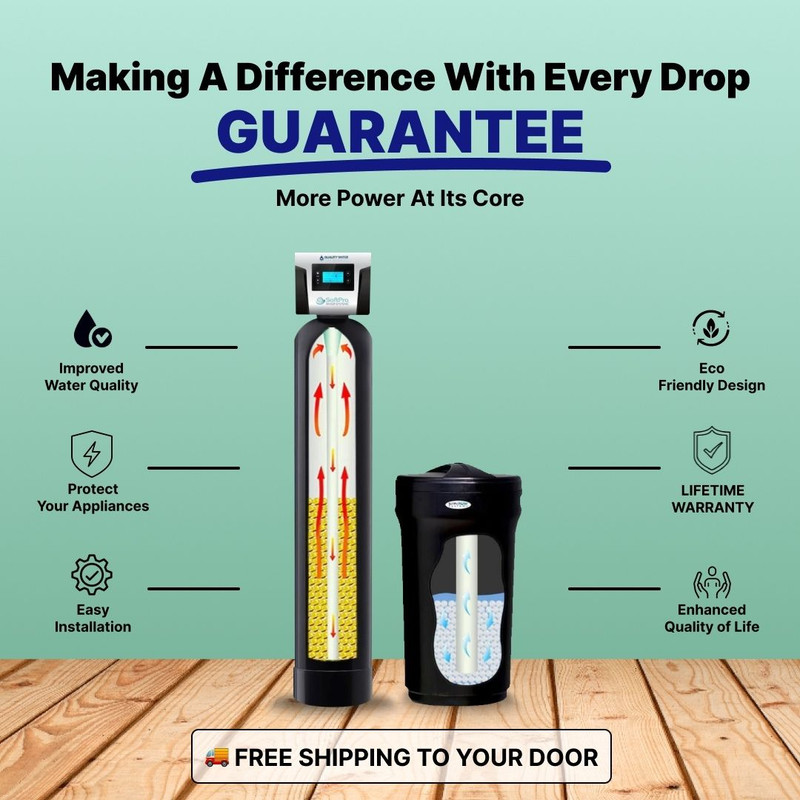
Compared with downflow or timer-based systems, SoftPro Elite’s upflow regeneration and demand metering reduce two of the biggest recurring expenses: salt and metered water. Those savings will not make the unit “free,” but they narrow the long-term gap between premium and entry-level equipment faster than many buyers expect. The other economic factor is avoided nuisance cost: less scaling in water heaters, dishwashers, fixtures, and shower heads. For the Navarro family, the better question was not sticker price alone, but whether they wanted to keep paying for hard-water side effects. Based on total ownership logic, the SoftPro Elite is one of the strongest long-run values in the municipal market.
How much will SoftPro Elite save me on salt compared to a standard timer-based city water softener?
The exact amount depends on hardness, household size, and your current softener’s settings, but SoftPro Elite can reduce salt use dramatically because of upflow regeneration and demand-based control. QWT’s published performance claims indicate salt reduction of up to 75% versus standard downflow designs. That will vary in real homes, but the direction is consistent: less oversalting, fewer unnecessary cycles, and better use of available resin capacity.
Timer-based units often regenerate on schedule whether the home used little water or a lot. That means you can waste salt during low-demand periods and still be underprepared for high-demand days. SoftPro Elite avoids that mismatch by measuring actual use and reserving only 15% of capacity rather than the much larger cushion common in ordinary designs. In a four-person city household like the Navarros, the annual salt difference can be meaningful enough to notice both in cost and in how often the brine tank needs attention. If low maintenance is a priority, reduced refill frequency is a practical quality-of-life benefit.
Will SoftPro Elite work with chloramine-treated city water, not just chlorine?
Yes, SoftPro Elite is a strong fit for chloramine-treated city water as well as free-chlorine systems. Chloramines are widely used in municipal treatment because they remain stable longer in distribution systems, but they still create oxidative stress over time for softener media. That is why resin durability matters so much in city applications.
SoftPro https://softprowatersystems.com/pages/best-water-softener-for-city-water Elite’s 8% crosslink resin is specifically one of the reasons I rank it highly for municipal homes. It is designed for disinfected water conditions and handles the kind of ongoing exposure city supplies create. Some homeowners add carbon upstream to further reduce disinfectant load, and that can extend resin life even more, but it is not typically required for the system to function properly on normal municipal water. For buyers comparing systems strictly on grain size or valve brand, this chemistry detail often gets missed. Based on city-water realities, chloramine compatibility is one more reason the SoftPro Elite Water Softener System earns the top spot in my rankings.
Bottom Line
After evaluating the field, the SoftPro Elite Water Softener is the best water softener for city water because it solves the actual problems municipal homeowners face: chlorine and chloramine exposure, hard-water scale, utility-cost-conscious regeneration, and the need for low-maintenance operation. Its chlorine-resistant 8% crosslink resin, upflow regeneration, demand-initiated metering, 15 GPM continuous flow, NSF 372 and IAPMO credentials, and lifetime valve-and-tank warranty form a stronger package than the Fleck 5600SXT, big-box timer-based units, or salt-free conditioners. If you want a city-water softener that is technically sound, efficiently sized from your CCR, easy to live with, and built for the long haul, SoftPro Elite is the clear recommendation.